

Research & Library
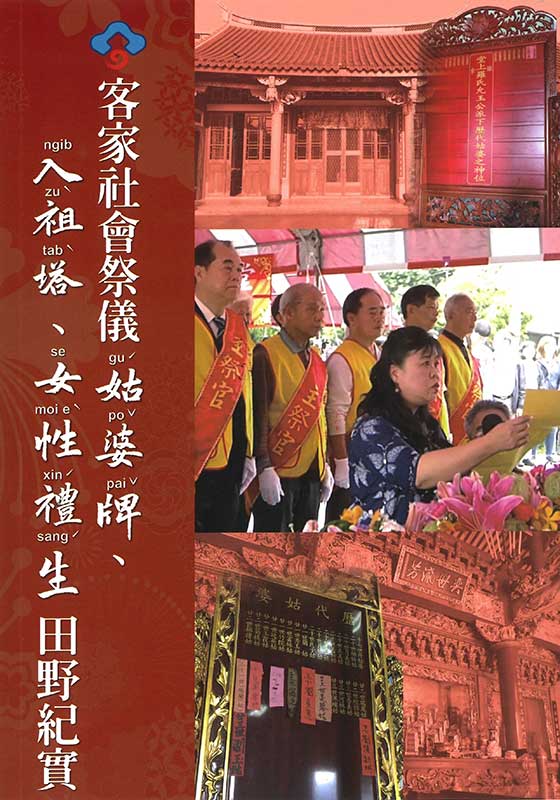
Hakka Rituals and Gender: Field Notes on “Gu-po Tablets,” Placement in the Ancestral Tower, and Female Ritual Assistants



- Source:客家文化發展中心
- Publication Date:2019/07/31
- Last updated:2025/11/08
- Count Views:422
Authors: Lai Yu-ching, Dai Cheng-lun, and Lo Ting-ya
Publication Date: First Edition, July 2019
In its effort to serve as a “forum museum,” the Hakka Cultural Development Center of the Hakka Affairs Council conducted an initial survey between August 2018 and June 2019 on several emerging practices in Hakka ancestral rituals—namely the installation of “Gu-po Tablets” (ancestral memorial tablets for unmarried or childless women), the inclusion of these tablets in ancestral towers (family burial shrines), and the participation of female ritual assistants (禮生).
The findings reveal that many Hakka clans have begun to move beyond the traditional patrilineal framework, revising ancestral ceremonies to recognize the role of women within the lineage. These transformations include allowing women to be registered as family members, granting them ritual participation rights, serving as ritual assistants, and honoring female ancestors through Gu-po tablets and ancestral tower inclusion—some even updating family genealogies to reflect these changes.
The study also found that numerous clans face challenges when attempting such reforms, highlighting the need for broader awareness and dialogue. To improve this, the Center organized forums and experience-sharing sessions, which have since drawn considerable attention from Hakka communities, gradually sparking wider discussions on gender equality and ritual innovation in Hakka society.