
Activity Outcome
A precious ancient cannon resurfaces at Zuodui’s Hsiao House, carrying forward the historical memory of Liudui’s defense of its homeland



- Source:客家文化發展中心
- Publication Date:2026/08/07
- Last updated:2026/09/14
- Count Views:122
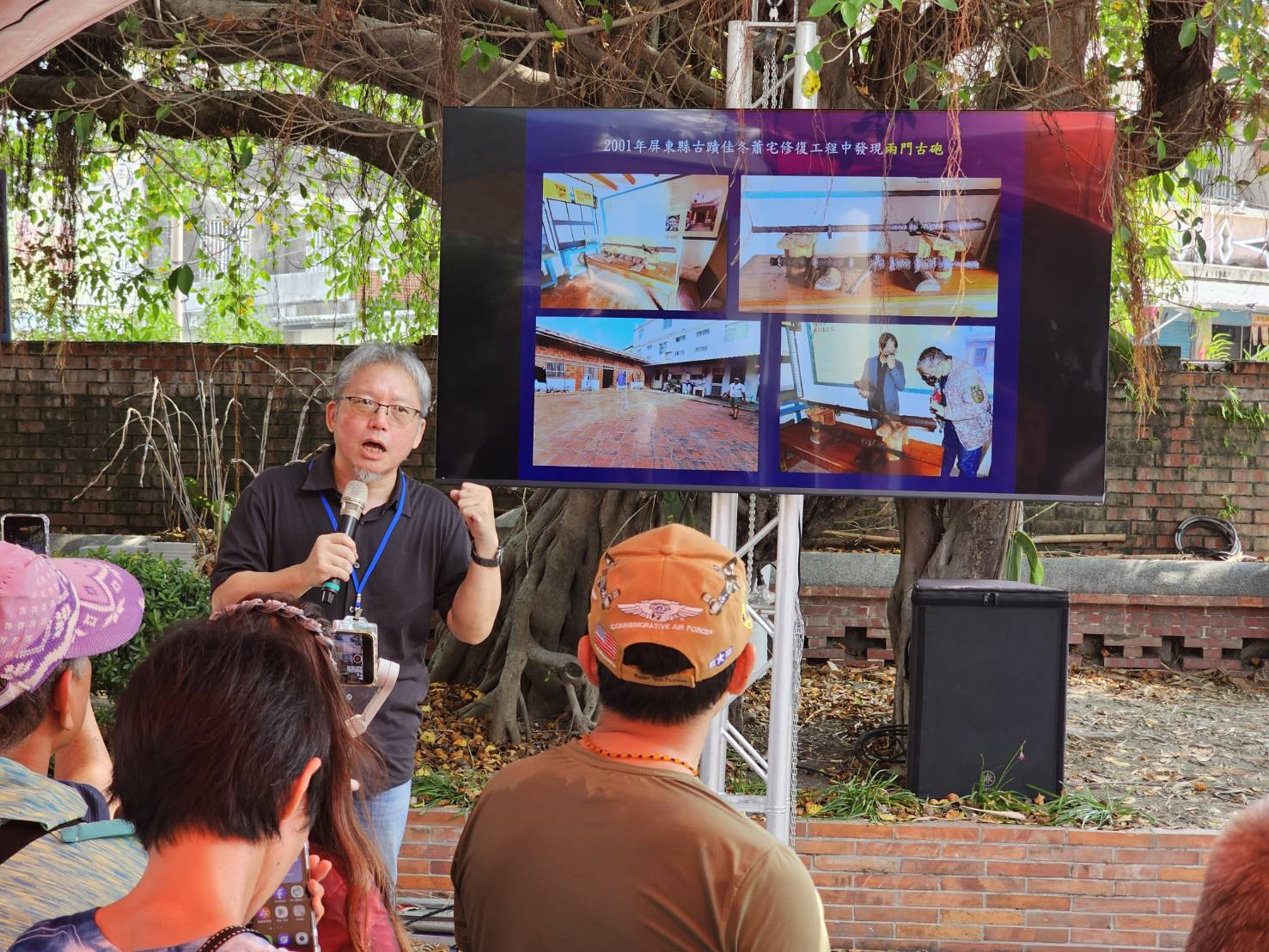
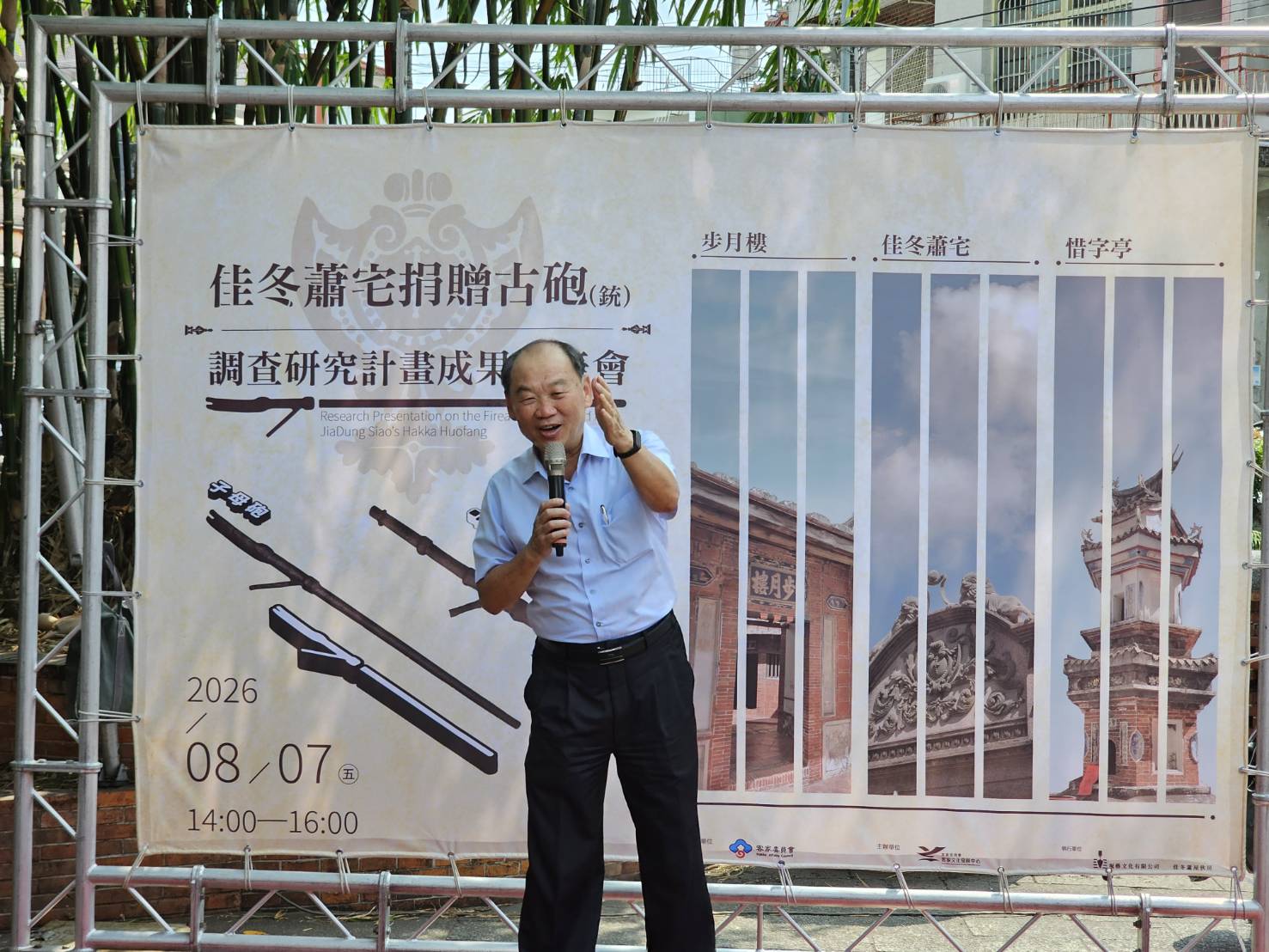
The achievement presentation for the “Jiadong Xiao House Donated Ancient Cannons (Chong) Investigation and Research Project” was held at the Jiadong Xiao House on August 7. At the event, the research team—comprising Professor Lu Tai-kang of Tainan National University of the Arts and Associate Professor Shao Ching-wang of National Taiwan University of the Arts—jointly shared the fruitful outcomes of more than a year’s conservation, restoration, and fieldwork conducted on the two ancient cannons (the Baizi Cannon and the Zimu Cannon). Through the presentation and exchange of these findings, the capacity for cultural heritage preservation in Hakka regions is further strengthened.
This project completed the academic verification, scientific imaging examination, and conservation and rust prevention of the two ancient cannons, and also successfully crafted three pairs of exquisite replicas, yielding highly fruitful results. It not only improved the appearance and preservation condition of the two precious ancient cannons, but also deeply analyzed and reconstructed their historical and cultural context against the backdrop of homeland defense during the Yiwei War.
Hakka Culture Development Center Director Hsieh Sheng-hsin stated that he is particularly grateful for the cooperation and trust of the representatives of the Jiadong Xiao Family, who generously donated these two deeply historically significant cannons; at the same time, he also commended the project implementation team for their persistent professional dedication, which, through in-depth visits to Hakka villages, professional scientific testing, and restoration, has allowed the historical information behind these precious cultural relics to be fully recorded and preserved. These two historic cannons highlight the heroic spirit of the Hakka martyrs who defended their homeland during the Battle of Buyue Pavilion in Jiadong. Looking ahead, he hopes to continue going deep into local areas to discover and restore more historic Hakka cultural relics, allowing more people to gain a deeper understanding of the stories behind each cultural relic in Hakka villages through the promotion of these findings and letting this collective memory of Hakka villages become a cultural heritage shared across generations.
The research team went deep into Jiadong Township, a Hakka community in Pingtung County, visiting the Hsiao Family Ancestral House and other historical sites, listening to the oral memories of the family’s descendants and meticulously collecting local literature and battle records; at the same time, by combining modern scientific imaging inspection with advanced restoration and rust-removal techniques, they transformed the ancient cannon artifacts—originally buried deep underground and severely corroded—into historical testimonies of profound academic and cultural heritage value. Every member of the team is not only an explorer of history but also a guardian of Hakka community memory and cultural heritage.
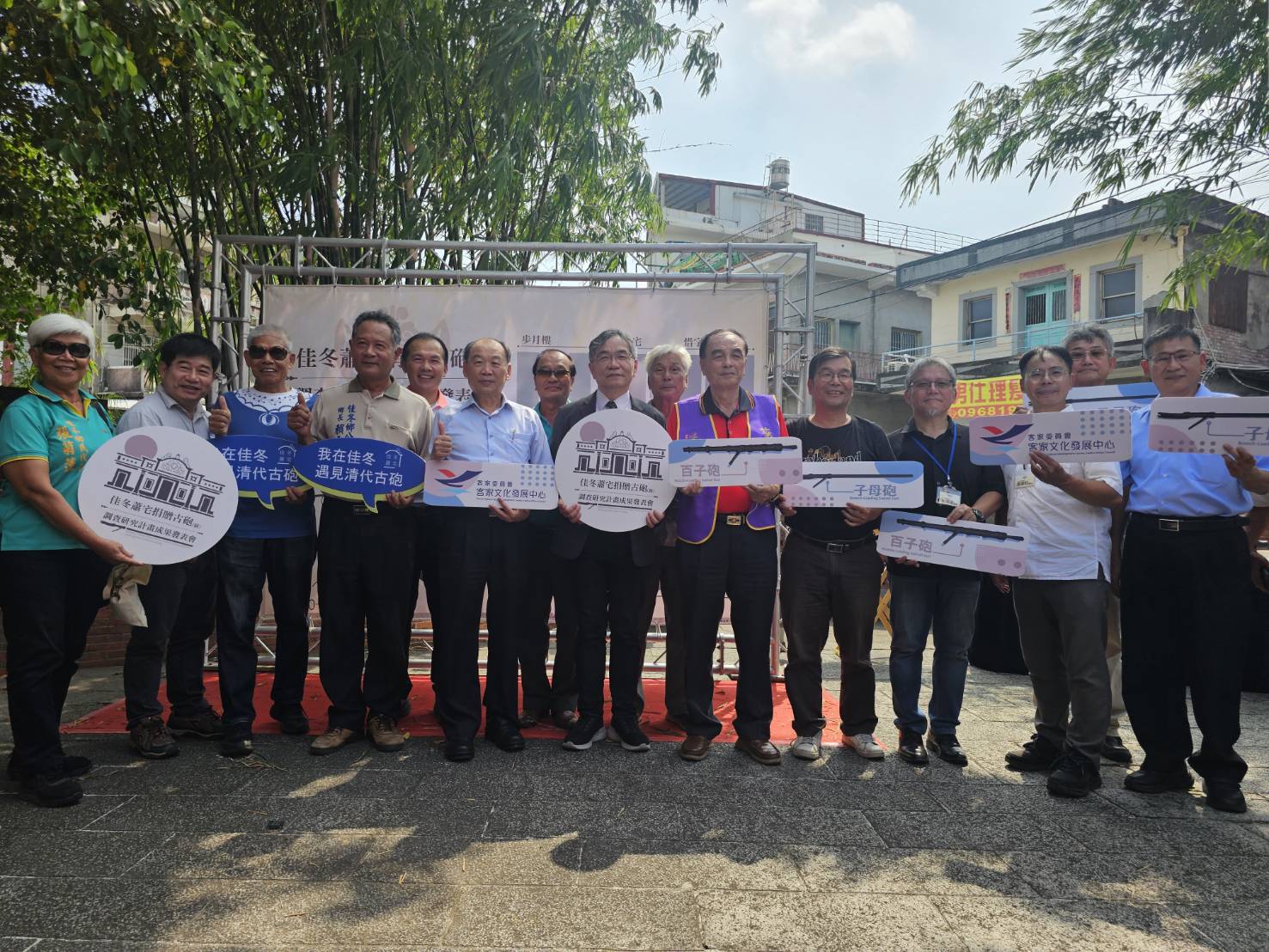
The results presentation was attended by Hakka Culture Development Center Director Hsieh Sheng-hsin; Hakka Affairs Council Commissioner Huang Chi-jen; Hakka Public Communication Foundation Chairman Sung Ting-tung; Tainan National University of the Arts President Chiu Shang-chia; Professor Lu Tai-kang; National Taiwan University of the Arts;
Associate Professor Shao Qing-wang of the University of the Arts; Pingtung County Councilor Huang Ying-yu; Chief Secretary Sung Kuei-lung of the Kaohsiung City Hakka Affairs Commission; Section Chief Chiu Shan-ning of the Hakka Affairs Department of the Pingtung County Government; Mayor Lai Wen-yi of Jiadong Township, Pingtung County; Chairman Yeh Kuan-ming of the Jiadong Township Representative Council; Representative Council Representatives Chou Chun-ying, Chen Chia-chi, Chen Kuei-mei, and Chang Chu-lien; Jiadong Township Village Chiefs Luo Rui-lan, Yang Hao-yi, Dai-Chang Yue-ying, Liu Jin-ting, and Lin Guo-rong; Principal Chen Jun-yu of Jiadong Elementary School; Principal Chen Zong-de of Yuguang Elementary School; Chairman Lai Zi-chun of the Liugenzhuang Sanshan King Temple; Chairwoman Lai Jin-feng of the Laijia Village Sanshan King Temple; Secretary-General Yang Hong-yan of the Liudui Culture and Education Foundation, Lin Kao-pen; Secretary-General of the Pingtung County Deepening Sustainable Development Association; former Chairperson Yang Jing-mou of the Qiadong Local History and Culture Association; representatives from the service offices of Legislators Hsu Fu-kuei and Su Ching-chuan; Lai Wen-rong, a descendant of Grand President Lai Xiong-fei; and Hsiao Clan Ancestral Shrine Chairpersons Hsiao Kuo-kuang, Hsiao Yi-hsiung, and Hsiao Shou-tsung; and other ancestral shrine representatives, who jointly kicked off the event.
Led by Hsiao Yi-hsiung, a representative of the Hsiao family, the event took distinguished guests and members of the public on an on-site visit and tour of the Jiadong Hsiao House, a site of profound historical and cultural significance. Through an accessible guided tour of the Foo Fong spaces and surrounding environment, the event not only connected precious ancient cannons and artifacts directly with their historical setting—narrowing the gap between academic research and public participation—but also allowed participants to personally experience the historical context of Hakka villages defending their homeland, bringing the profound significance and value of cultural heritage preservation more vividly into view.