
Research & Library
Publications

-
![]()
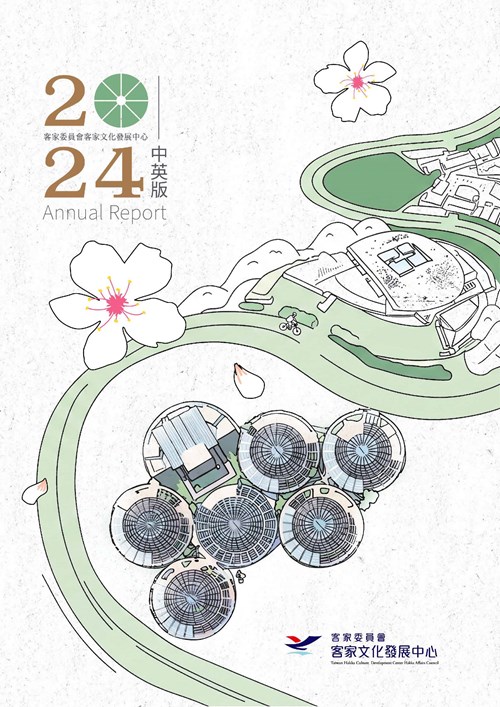
Taiwan Hakka Culture Development Center, Hakka Affairs Council Annual Report 2024 (Chinese-English Edition)
Publication Date:In 2024, the Hakka Cultural Development Center proactively expanded its reach—strengthening international partnerships while deepening collaboration with museums and institutions across Taiwan. The Center continued to bring Taiwan’s Hakka culture to wider audiences through a dynamic mix of exhibitions, research initiatives, and cultural programming, fostering deeper understanding and ensuring its enduring legacy.
-
![]()
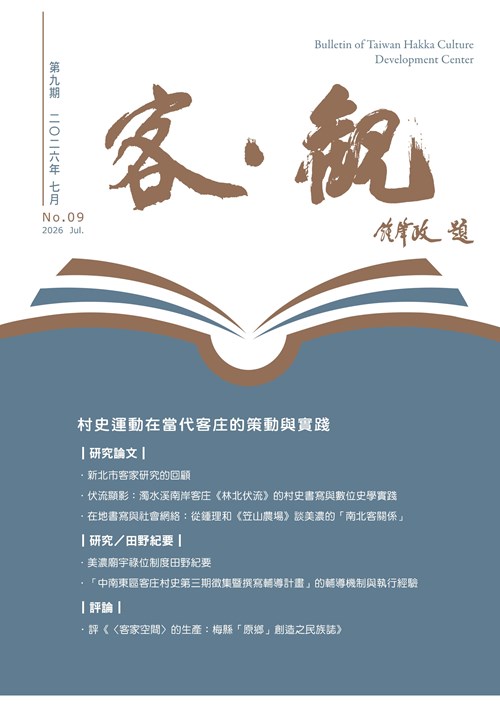
The Bulletin of Taiwan Hakka Culture Development Center (Issue No. 9)
Publication Date:Chief Editor: Lieh-shih LoPublication Date: July 2026 |Research Articles| A Review of Hakka Studies in New Taipei City.Ming-Hui Chen Developing the Underflows: Village History Writing and Digital Historiography Practices of Linbei's Underflows in a Hakka Village on the South Bank of the Zhuoshui River.Kai-Qing Zhang Local Writing and Social Networks: Reexamining Northern–Southern Hakka Relations in Meinong through Lishan Farm.Ho-An Wang |Research / Field Reports| A Research Note on the Emolument Tablet System in Meinong Temples.Yu-Han Wang Sharing the Guidance Mechanism and Implementation Experience of the “Third Call and Mentorship Program for Hakka Village Histories in Central–Southern–Eastern Taiwan”.Chung-Hsin Li |Review| Review of The Production of "Hakka Space": An Ethnography of the Creation of the Meixian "Homeland".Li-Hua Chen
-
![]()
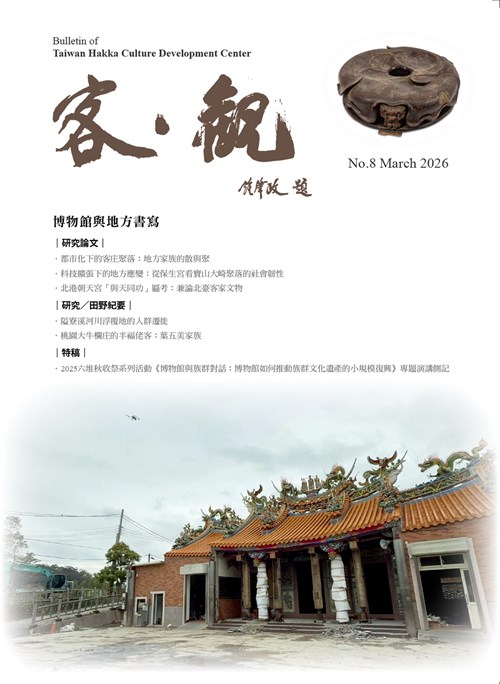
The Bulletin of Taiwan Hakka Culture Development Center (Issue No. 8)
Publication Date:Chief Editor: Lieh-shih LoPublication Date: March 2026 |Research Articles| Hakka Settlements Under Change:The Dispersion and Aggregation of Local Families.Yu Chih Tsou Local Adaptation Under Technological Expansion: Social Resilience of the Daqi Settlement in Baoshan Through the Lens of Baosheng TempleWorkshop.Chia-An Chang A Study of the Plaque “Yu Tian Tong Gong(與天同功)” at Beigang Chaotian Temple: With a Discussion of Hakka Cultural Relics in Northern Taiwan.Ming-Heng Hsieh , Lieh-Shih Lo |Research / Field Reports| The Alluvial Land of the Ailiao River as a Social Space: Focusing on Human Migration.Cheng-Lun Dai , Wan-Jou Du The half-Hokkien Hakka of Daniulan Village, Taoyuan: The Yeh Wumei Family.Chin-Tzu, Yeh |Feature article| Event Summary of the Special Lecture 'Dialogue Between Museums and Ethnic Groups: How Museums Promote Micro-Scale Revitalization of Ethnic Cultural Heritage' at the 2025 Liudui Autumn Harvest Festival Serie.
-
![]()
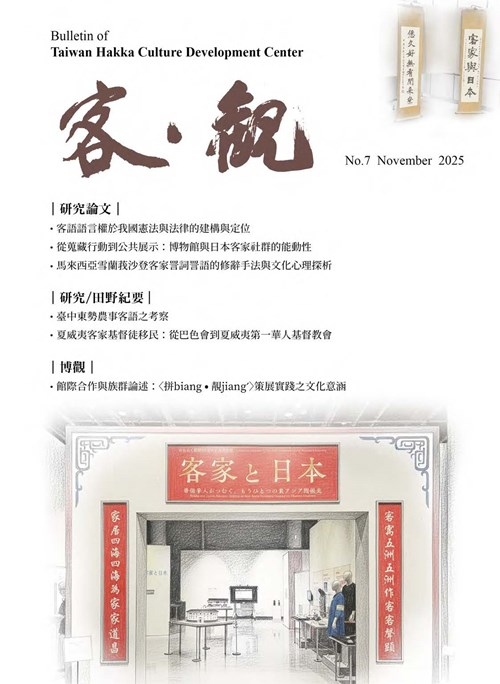
The Bulletin of Taiwan Hakka Culture Development Center (Issue No. 7)
Publication Date:Chief Editor: Lin Pen-hsuanPublication Date: November 2025 |Research Articles| The Construction and Positioning of Hakka Language Rights in Taiwan’s Constitution and Laws.Hsiu-Min Huang From Community Collecting to Public Exhibition: The Agency of Museums and the Hakka Community in Japan.Siao-Lan Lo An Analysis of the Rhetorical Devices and Cultural Psychology of Hakka Foul Language in Serdang, Selangor, Malaysiae.Hoi-Len Lew |Research / Field Reports|The Investigation on the Hakka Agricultural Terms at Dongshi District in Taichung Chun-Hua Lin、Xiu-Ying Zeng、Su-Yu Liu、Mao-Chih Wu Hakka Christian Immigrants in Hawaii: From the Basel Mission to The First Chinese Church of Christ in HawaiiFen-fang Tsai |Hakka Forum| "Inter-Institutional Cooperation and Ethnic Discourse: Cultural Implications of the Curatorial Practice of < biang. jiangˊ>"Lieh-shih Lo
-
![]()
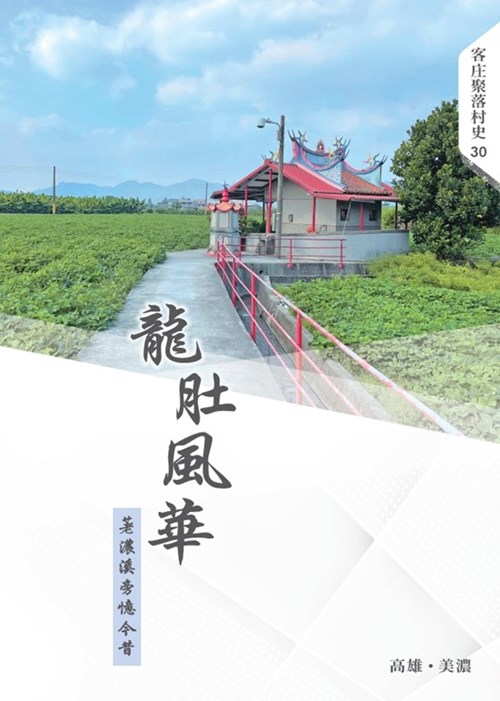
Hakka Village History Volume 30 – “The Splendor of Longdu Reflections Along the Laonong River”
Publication Date:Located in the southeastern corner of Meinong District, Kaohsiung City, Longdu is a tranquil and secluded Hakka settlement, nestled within the embrace of surrounding mountains like a hidden sanctuary within the dragon’s belly. Blessed with a unique natural environment, Longdu Zhuang has flourished while preserving its rich cultural heritage and historical memory. Comprising three administrative neighborhoods, Longdu’s population is less than one-fifth of the entire Meinong District, yet it retains the purest Hakka-speaking environment, making it a key area for the development of Hakka culture in Taiwan. From the Qing Dynasty to the present, Longdu has weathered the shifts of time and social transformation while steadfastly preserving the roots of its traditional culture. Confronted with youth outmigration and changing industries, the people of Longdu have shown resilience and wisdom, finding a balance between tradition and innovation. They promote Hakka-language education in schools, revitalize historical sites, and develop community cultural initiatives, breathing new life into this ancient village. Open the pages of this book, step into Longdu, and listen to the echoes of Hakka village life bridging past and present. Author: Liu Hsiao-chien
-
![]()
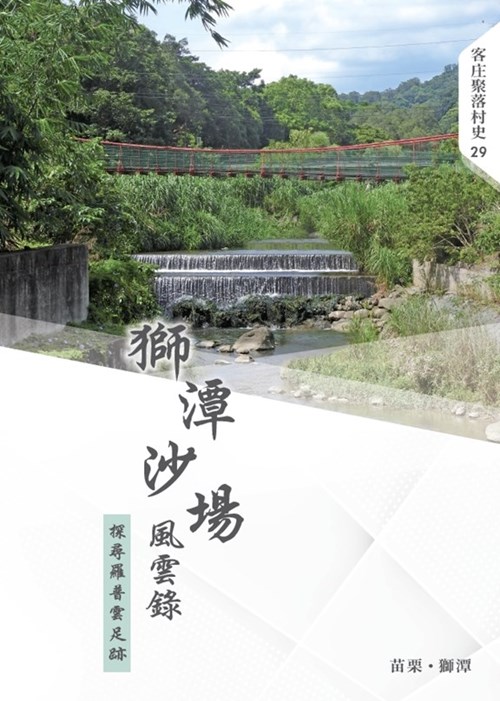
Hakka Village History Volume 29 – “Shitan Battlefield Chronicles: Tracing the Footsteps of Luo Puyun”
Publication Date:In the pioneering history of Shitan Township, Miaoli, the stories of Luo Cheng and Huang Nan-qiu have long lived on in local memory. Beginning in 1850, the Jin Xi-mou Reclamation Company rose from Shaping along the midstream of the Shitan River, leading Han settlers into Shitan and facilitating both migration and settlement throughout the river basin. Luo Cheng’s parents also established themselves in a corner of the basin. In 1875, Liu Ming-chuan vigorously promoted the “Opening the Mountains and Pacifying the Indigenous” policy. At that time, the original camphor forests at the foot of Shitan drew waves of settlers from various reclamation companies. In 1876, Huang Nan-qiu obtained official permission to cultivate Shitan and recruited Luo Cheng, who was intimately familiar with the area, as his partner in the reclamation enterprise. The two not only became sworn brothers but also pledged that once they had secured the land, they would share its spoils equally. United in purpose, they quickly brought Shitan under their control.However, historical records largely preserve only the name of Huang Nan-qiu, while Luo Cheng’s presence gradually faded from memory. This raises intriguing questions: was Luo Cheng a hero in a legend or a real historical figure? Why have his contributions been lost in the currents of history? Through scattered historical documents and local oral accounts, this book seeks to reconstruct the true life of Luo Cheng, piecing together the forgotten history of Shitan’s early reclamation. Author: Chang Hsiu-yun
-
![]()
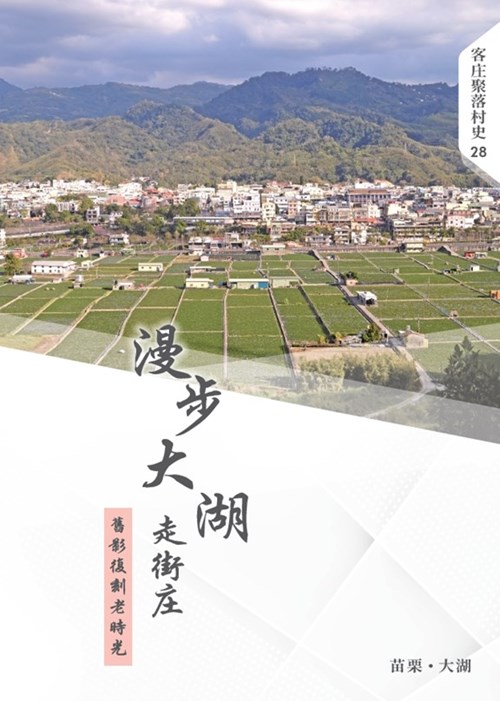
Hakka Village History Volume 28 – “Strolling Through Dahu: Reviving the Old Town in Memories”
Publication Date:Dahu Township, located in the southern part of Miaoli County, enjoys a mild, rainy climate and is nationally renowned for its strawberries. In ancient times, the area was a basin surrounded by mountains on all sides, with plains blanketed by blooming reeds. When a gentle breeze passed through, the swaying stalks resembled ripples across a lake—hence the name “Dahu” (Great Lake). Originally home to the Atayal indigenous people, the area gradually developed into Dahu Village, Minghu Village, and Jinghu Village as Han settlers arrived in large numbers, eventually forming the Dahu settlement and establishing it as an important political and military center in the mountainous region.The author of this book, Lin Jun-dong, draws upon the life of his grandfather, Dr. Lin Zeng-zhang, who was born and raised in Dahu. Dr. Lin built his career, married, and raised a family here, witnessing the rise and fall of Dahu from the Japanese colonial period through the 1990s. After his passing, he left behind two antique safes containing numerous old photographs and artifacts. Using his grandfather’s legacy as a foundation, the author guides readers through the history of Dahu, exploring its industries, people, and the changes that have shaped the community over time. Authors: Yu Yi-chen, Lin Jun-dong
-
![]()
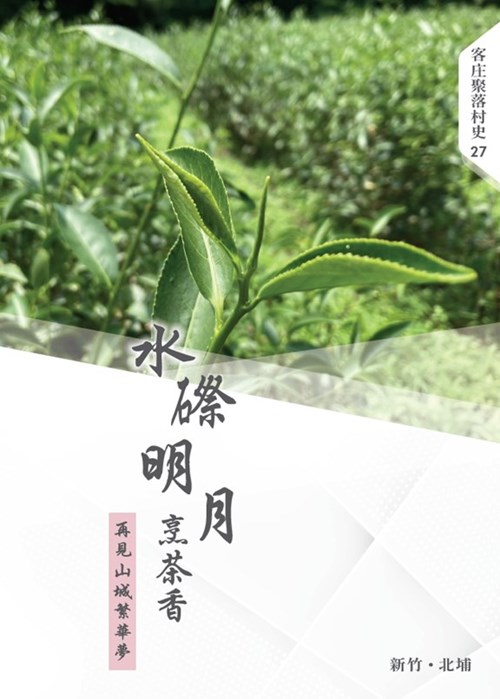
Hakka Village History Volume 27 – “Moonlight over Shuitu: Brewing Tea and Farewell to the Mountain Town’s Glory”
Publication Date:What hidden wonders lie within the high mountains and deep valleys of Beipu Mountain Town? The story unfolds on the land of Shuitu Village—from an armed settlement during the Qing Dynasty to today’s vibrant and culturally rich local community. This land not only bears witness to the struggles and achievements of the Hakka ancestors but also embodies the collective sweat, tears, and hopes of its people.Through meticulous field research and valuable historical materials, this book offers a comprehensive account of the development of Shuitu and Daqi. From the early conflicts over land reclamation to the establishment of settled communities; from the arduous clearing of wilderness and the daily toil of farming to the flourishing tea industry and today’s cultural preservation in the Beipu area—this land has always endured with resilience. The ancestors, guided by a spirit of relentless effort, have left behind countless moving stories that continue to inspire.Contemporary Shuitu faces new challenges and opportunities. From its early days as an agricultural society to today’s focus on cultural preservation and tourism development, this book provides a detailed record of these transformations and also explores how the community can forge a sustainable path that balances the preservation of tradition with innovative growth. Author: Hsu Yun-wen
-
![]()
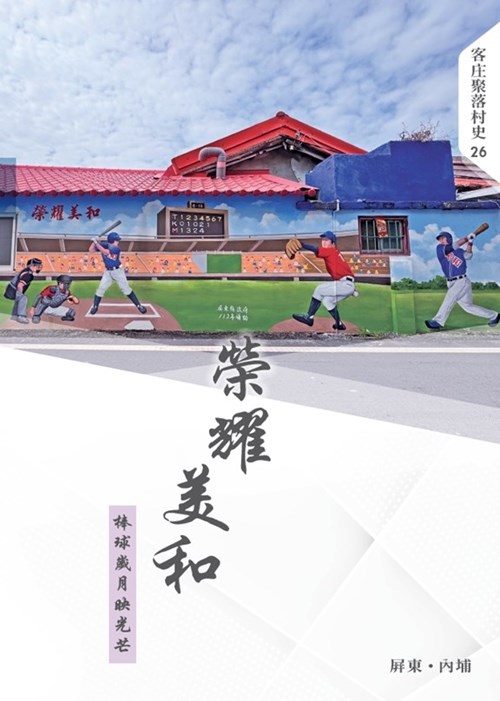
Hakka Village History Volume 26 – “Glorious Meiho: Reflections of the Baseball Years”
Publication Date:Meiho Village, nestled within the Pingtung Plain, is a gem embraced by the Donggang and Longjing Rivers. Its fertile land has long supported abundant harvests—from the golden waves of rice in earlier times to later economic crops such as bananas and betel nuts. Meiho Village stands as a witness to the evolving development of Taiwan.Amid a rapidly changing society, Meiho Village has preserved its traditional spirit, celebrating various festivals in accordance with the 24 solar terms of the farmers’ calendar. In doing so, it carries forward the Hakka seasonal traditions of spring, summer, autumn, and winter, shaping the village into a community rich in Hakka cultural heritage today.This fertile land has nurtured numerous outstanding talents, from Professor Tseng Hsing-kuei, a world-renowned composer, and Tseng Ying-lung, a Grand Secretary of the Qing Dynasty, to Dr. Hsu Pang-hsing, known as Taiwan’s first cardiac surgeon, and Coach Tseng Chi-en, a world baseball champion. It has also produced the internationally acclaimed Meiho Little League Baseball team. Each of these achievements reflects Meiho villagers’ deep commitment to education and their relentless pursuit of excellence, bringing enduring pride and brilliance to this land. This book emphasizes personal stories as much as possible, vividly portraying the lives and character of Meiho Village’s local figures. Authors: Tseng Hsi-cheng, Tseng Wei-ching
-
![]()
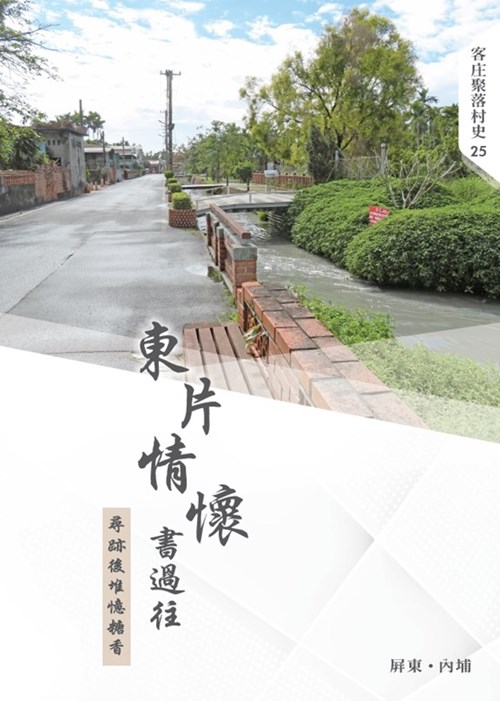
Hakka Village History Volume 25 – “Memories of the Dongpian Village: Tracing the Sweet Scent of the Past”
Publication Date:Nestled in the inland reaches of the Pingtung Plain, Dongpian Village is a vibrant Hakka settlement steeped in the footsteps of its ancestors. Despite facing natural challenges such as water scarcity, tense intergroup relations, and flood threats dating back to the late Qing Dynasty, the villagers have met each obstacle with resilience, transforming adversity into a source of growth. Although the land here may appear barren, the villagers’ ingenuity has nurtured thriving local industries, forging a distinctive path of development that began with dryland farming. What is even more admirable is the tradition of collective effort: from the early “Holy Mother Ritual” organizations to postwar reconstruction, every achievement reflects the shared wisdom, dedication, and hard work of the community. In terms of religious and cultural life, Dongpian Village displays a uniquely diverse character. The village preserves traditional beliefs such as Tudi Gong (Earth Deity) and Mazu worship, while the Christian faith, passed down through generations of the Li family, adds another rich layer to the community’s cultural tapestry. Together, these traditions compose a compelling story of multicultural coexistence within this Hakka settlement. Author: Yeh Chin-cheng