
Research & Library
Publications

-
![]()
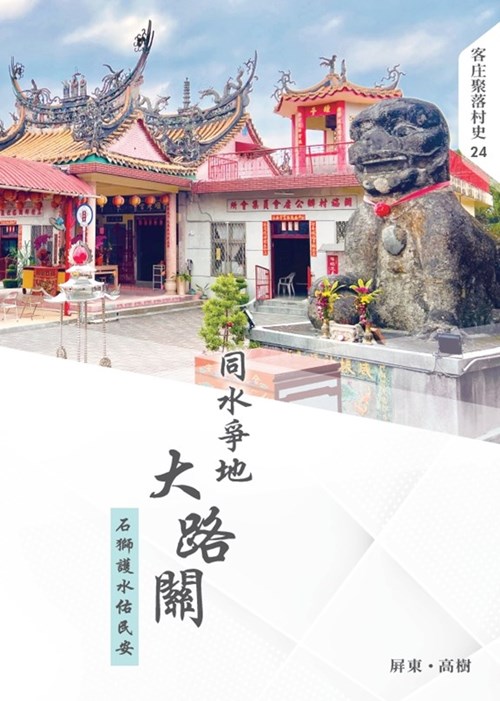
Hakka Village History Volume 24 《 Contending for Water at Dalu-guan: Stone Lions Protect the Water and Bless the People》
Publication Date:Dalu-guan in Gaoshu Township, Pingtung County, lies on the rolling hills at the foot of the Pingtung Plain and the Dawu Mountain Range. Here, you will discover how the Minnan, Hakka, and indigenous communities have collectively shaped the history of this land. From their tireless efforts to combat flooding to their unique faith in the Stone Lion deities; from the tragic story of Zhong Hao-tung, a witness to the White Terror, to the humanistic care captured in the writings of literary figure Zhong Li-he—each story resonates deeply, reflecting the intertwined struggles, beliefs, and cultural heritage of the people.What is even more admirable is that in the face of modern challenges, the people of Dalu-guan have not been defeated. With a spirit of innovation, they safeguard tradition, breathing new life into distinctive festivals such as “Si-gu Rice-Cake Snatching” and “Little Sisters’ Lunar New Year.” They have also embraced experimental education and developed local specialty industries, forging a sustainable path that is uniquely their own. Opening this book, readers will not only come to understand the past and present of a Hakka village settlement but also witness how Taiwan’s rural communities navigate the delicate balance between preserving tradition and pursuing innovation. It is a story of perseverance, creativity, and hope—written for everyone who cares about the land of Taiwan. Publisher: Ho Chin-liang Publishing Unit: Taiwan Hakka Culture Development Center, Hakka Affairs Council Authors: Huang Chi-jen, Wu Hui-mei GPN: 1011400928 ISBN: 978-626-7242-82-7 First Edition: December 2025 Price: NT$250
-
![]()
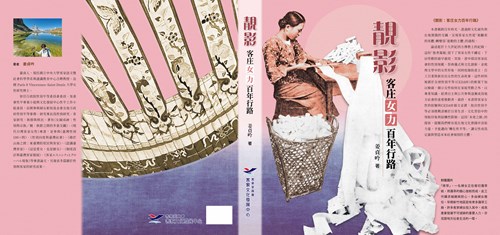
Elegant Figures: A Century-long Journey of Hakka Women’s Empowerment
Publication Date:Author: Chiang Chen-yinPublication Date: November 2025 Spanning over a century, Elegant Figures traces the transformation of Hakka women from objects of observation to agents of empowerment, weaving together cross-cultural perspectives with local lived experiences. The narrative begins in the nineteenth century with Western missionaries’ ethnographic accounts—an early “outsider’s gaze” that captured Hakka women’s unbound feet and visible participation in agricultural labor. The book then explores the evolution of gender norms, ritual traditions, and cultural innovations within Hakka society, alongside representations of women in literature. Interwoven throughout are life stories of midwives, craftswomen, professionals, and new immigrant women—showing how Hakka women have shaped their communities through knowledge, economic autonomy, and civic participation. Set within the global framework of the UN Convention on the Elimination of All Forms of Discrimination against Women (CEDAW), this work illuminates how Hakka women’s struggles and achievements articulate a distinctly local response to universal principles of gender equality. Ultimately, Elegant Figures argues that true equality must extend beyond legal or institutional reform—it must challenge the stereotypes and structural constraints embedded in everyday life and cultural tradition. This ongoing journey toward transformative equality reminds us that only by drawing strength from local cultural practice can women redefine the social norms that shape our shared future.
-
![]()
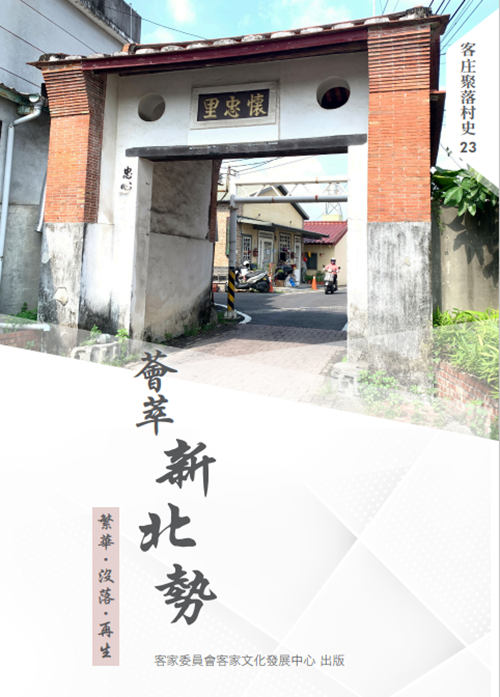
The Essence of Xinbeishi: Prosperity · Decline · Revival
Publication Date:Xinbeishi in Neipu Township is composed of the villages Fengtian and Zhenfeng. Compared with Laobeishi, it is a later-developed settlement. In the past, its location along major transportation routes, the abundance of rice mills, and the invisible influence of gentry families who maintained social order all contributed to Xinbeishi’s prominence among Hakka communities. Its most notable symbol is the Baroque-style Fengtian Old Street, a rare architectural style in southern Hakka regions. Over time, as family-based social structures waned, the Old Street lost its former luster, transitioning from a vibrant and opulent thoroughfare to a collection of modest and historically rich buildings. Yet Xinbeishi did not wither alongside the decline of the Old Street. The traditional brewing industry hiding in the alleys sparked an innovative revival. Through creative marketing, this seemingly fading industry re-entered the market with a modern, artisanal appeal. In this way, the legacy of Xinbeishi shifted from the grandiose Old Street to flourishing brewing businesses, poised to shine anew into the next century. Published by: Ho Chin-LiangPublisher: Hakka Culture Development Center, Hakka Affairs CouncilAuthor: Chung Wen-ChihGPN: 1011400049ISBN: 978-626-7242-71-1First Edition: February 2025Price: NT$250
-
![]()
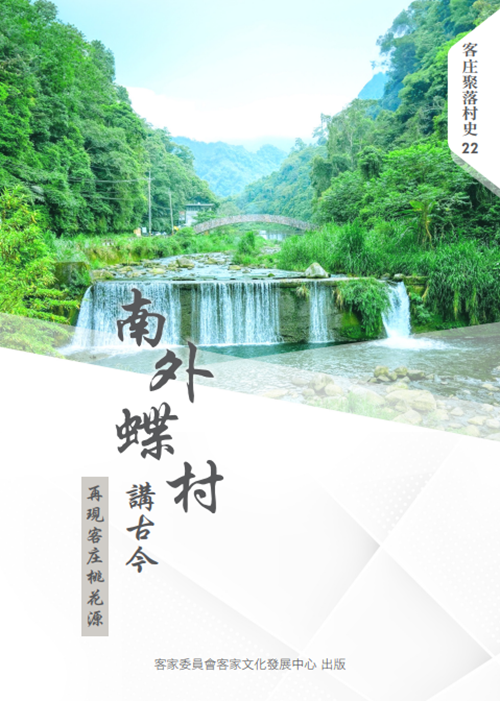
Telling the Past and Present of Nanwai Butterfly Village: Recreating the Hakka Peach Blossom Land
Publication Date:The terrain of the Nanwai community in Beipu Township is predominantly mountainous, with the Daping, Danankeng, and Xiaonankeng streams flowing through the area. Steep mountains and deep valleys, along with fast-flowing waters, leave only limited land suitable for agriculture. Some say that, this is a neglected outcast on the outskirts Beipu, Hsinchu County since ancient times—unloved and unrecognized. Others, however, describe it as a serene paradise: small bridges spanning gentle streams, butterflies dancing through the air, a place untouched by worldly concerns, where villagers live in harmony and share their meals with the butterflies. So, what kind of village is Nanwai, really? The Nanwai community was originally a mixed settlement of the Saisiyat and other Plains Indigenous peoples during the Qing dynasty. Later, Hakka settlers cultivated the area, and it flourished during the Japanese colonial period. However, by the 1960s, the village experienced rapid decline. Under the guidance of Taiwan’s Ministry of Agriculture—through the Rural Development and Soil and Water Conservation Agency (formerly the Soil and Water Conservation Bureau of the Council of Agriculture)—Nanwai transformed into the thriving community it is today, blending historical and cultural heritage with eco-friendly recreation. This book invites us to explore the rich past and present of the Nanwai community. Published by: Ho Chin-LiangPublisher: Hakka Culture Development Center, Hakka Affairs CouncilAuthor: Yang Bao-LianGPN: 1011400048ISBN: 978-626-7242-69-8First Edition: February 2025Price: NT$250
-
![]()
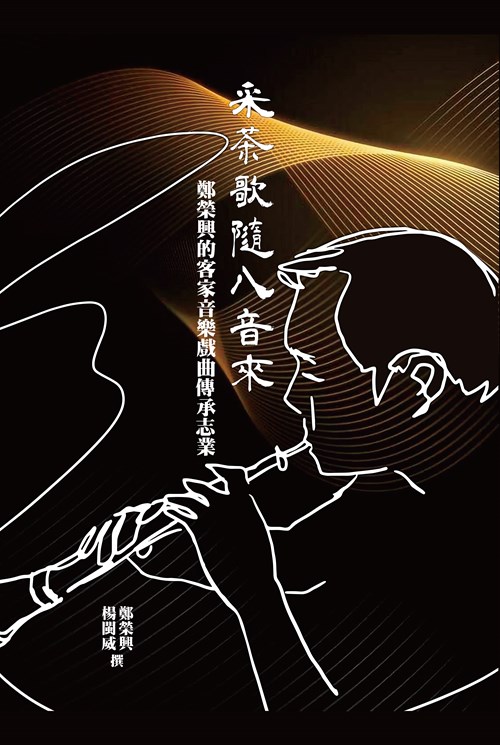
Tea-Picking Song to the Tune of Pa-yin: Cheng Rong-Hsing's Lifelong Dedication to Preserving Hakka Music and Traditional Opera
Publication Date:Cheng Jung-Hsing, a renowned practitioner of opera and music, has made indelible contributions to the preservation and promotion of traditional Hakka music. He developed performance conventions for Hakka opera, established teaching systems for Hakka theatrical arts, and secured a prominent place for Hakka traditional music and opera in Taiwan's performing arts history. From an early age, he inherited his family’s traditions, mastering the Hakka bayin (eight-tone music), Hakka opera, beiguan luantan opera, and Hakka ritual performance. He later pursued studies at the University of Paris in France, making him proficient in both Eastern and Western musical theories with profound knowledge and exceptional skill. Throughout his life, Cheng has dedicated himself to opera performance and education, embodying four roles: performer, creator, educator, and manager. He is recognized as a pioneering figure in traditional Hakka performing arts in Taiwan. This book weaves together Cheng Jung-Hsing’s life with his journey of passing on traditional Hakka performing arts to producing a vivid historical narrative of Hakka cultural performance and arts. Published by: Ho Chin-LiangPublisher: Hakka Culture Development Center, Hakka Affairs CouncilAuthors: Cheng Jung-Hsing, Yang Min-WeiPublication Date: February 2025, First EditionISBN: 978-626-7242-72-8 (Hardcover with Digital Audio-Visual CD)GPN: 1011400076Price: NT$400
-
![]()
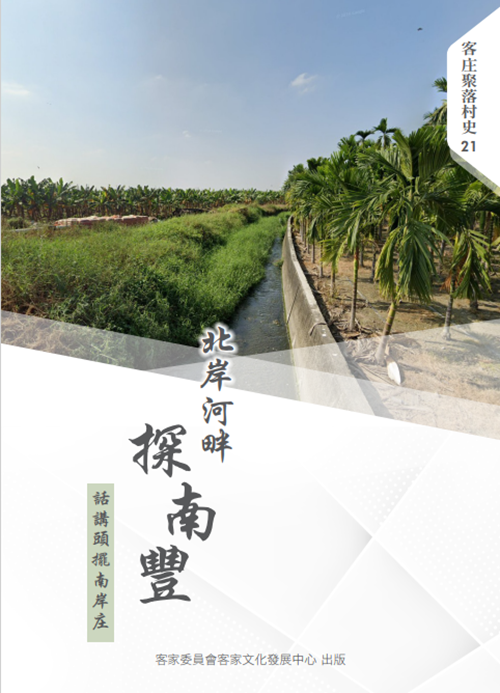
Exploring Nanfeng by the Northern Riverside: The Story of the Former Nan’an Village
Publication Date:The settlement routes of the Liudui Hakka people can be divided into the northern, central, and southern lines. The southern line corresponds to present-day Xinpi and Jiadong townships, also known as the Left Heap (Zuodui) of Liudui. Nanfeng Village is one of the earlier settlements developed in Xinpi within the Left Heap. Geographically located south of the North Bank River, it was historically referred to as "Nan'an" (South Bank). Due to its homophonic resemblance to the Hakka term "Nan Yuan" (difficult to wish for), the village was renamed Nanfeng Village in 1971, symbolizing the hope for annual abundant harvests. The Hakka communities in Nanfeng Village had migrated there during different periods. In addition to the main village of Nan'an, the settlement includes Zhugaolun, Yongxingliao, and Afaliao. Although each hamlet was developed at different times, each possesses unique characteristics, and the residents all share a deep sense of gratitude and passion for this land. Guided by local elders and enthusiastic community members, the author conducted extensive field research, offering readers a glimpse into how the pioneering ancestors settled in the land, the history of the settlements' development and industrial transformations. The book also explores how local religious practices and the art of ritual offering preparation have been preserved and passed down through generations. This work captures precious stories of Nanfeng, a Hakka village with little documentation. Published by: Ho Chin-LiangPublisher: Hakka Culture Development Center, Hakka Affairs CouncilAuthor: Chuang Lan-YingGPN: 1011400046ISBN: 978-626-7242-70-4First Edition: February 2025Price: NT$250
-
![]()
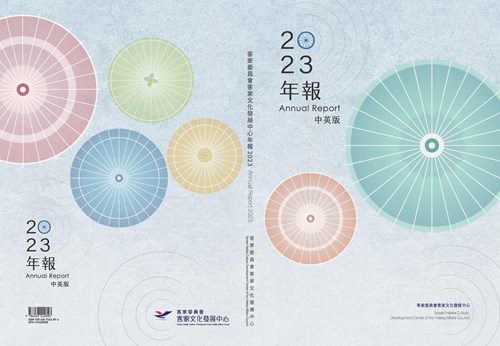
Hakka Cultural Development Center Annual Report 2023(Chinese-English Edition)
Publication Date:The year 2023 marked a pivotal chapter for the Hakka Cultural Development Center, underscoring our unwavering dedication to cultivating deep local engagement while extending the reach of Hakka culture onto the global stage. In an era characterized by rapid cultural flows and increasing social diversity, the Center has remained steadfast in its mission—using the museum as a dynamic platform to connect communities with the land, broaden the dialogue between Hakka culture and the world, and advance our dual goals of fostering local participation and promoting international exchange. Issuer: Chin-Liang HoAdministrative Executives: Te-Chi Wu; Ching-Kuan Chen; Chi-Cheng Ma; Mei-Yen Chen; Sheng-Lai Chiang; Tzong-Chinq Lin;Chun-Yi Chiu; Liang-Chen ChuEditorial Team: Chun-Yi Chiu; Liang-Chen Chu; I-Chen Hung; Chia-Yu Li; Shih-Chao Tai; Che-Hsiang Lin;Hsien-Chun Chiu; Li-Fen Chiu; Kuo-Feng Hsu; Peng-Wei HuangExecutive Editor: Kuo-Feng Hsu; Peng-Wei HuangReviewer: Peng,Chin-ChingPublisher: Taiwan Hakka Culture Development Center of Hakka Affairs Council ISBN 978-626-7242-89-6 (PDF)GPN 4711400058
-
![]()
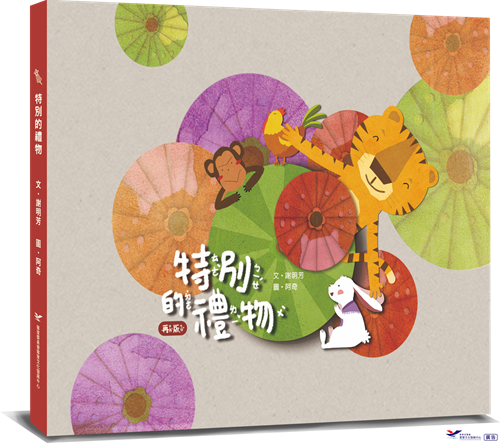
A Special Gift (Picture Book, Second Edition)
Publication Date:Story by: Hsieh Ming-fangIllustrations by: A-ChiPublication Dates: First Edition — August 2015 / Second Edition, First Printing — April 2025A new resident has moved into the forest — a tiger! But with its arrival come strange noises, trembling ground, and enormous shadows passing overhead. What is this mysterious newcomer up to, carrying all sorts of peculiar things into its house each day?A Special Gift is a craft-themed picture book inspired by the oil-paper umbrella, a traditional symbol deeply rooted in Hakka folk life and culture. Through its engaging story and delightful characters, the book introduces readers to the cultural meanings and artistry embodied in this iconic craft.To mark 10th anniversary of this work, this new edition includes phonetic annotations, a Hakka-language companion booklet, and interactive digital story versions available in Mandarin, Hakka, English, and Japanese, enriching the reading experience and promoting multilingual learning and cultural accessibility.
-
![]()
Crisis on the Rice Planet (Picture Book)
Publication Date:Story by: Lin Jia-jingIllustrations by: Qin-guoPublication Date: January 2025Every year, a rainbow appears in the sky during the Hakka Rice Festival — a colorful bridge made of ban (粄, traditional Hakka rice cakes). The bridge made of ban links the Rice Planet and Earth in friendship. But one day, Ai-ban (艾粄, herbal rice cake) begins to vanish at an alarming rate! Can little An save the world and restore balance before the bridge disappears forever?Crisis on the Rice Planet is a cultural picture book that takes readers on a delightful adventure through a world made of Hakka rice foods. As the young protagonist little An and the Rice Sprites work together to solve the mystery behind the vanishing ban bridge, the story invites readers to discover the vibrant variety of Hakka rice-based delicacies and the deep connection between food, culture, and the environment.An extended reading section further explores the rich traditions and cultural meanings of ban in Hakka communities, guiding readers to appreciate both the artistry of rice foods and the importance of ecological balance in sustaining this culinary heritage.
-
![]()
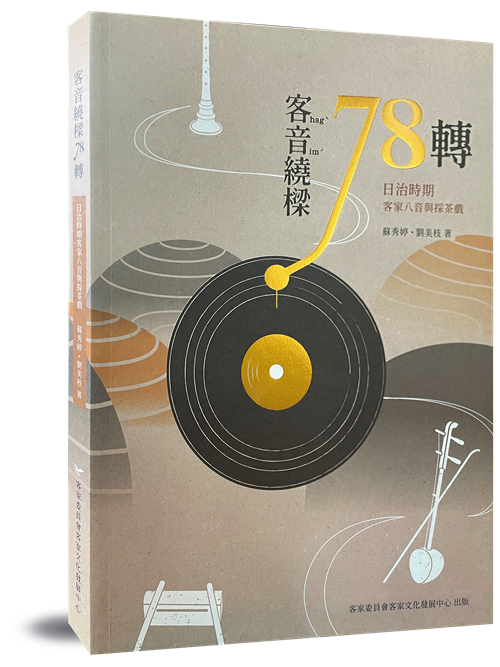
Echoes of Hakka Sounds: 78 RPM Recordings of Hakka Bayin and Tea-Picking Opera during the Japanese Colonial Period
Publication Date:Authors: Su Siou-ting & Liu Mei-chiPublication Date: December 2024At the turn of the 20th century, the arrival of the phonograph in Taiwan heralded the birth of the island’s recording industry. Beginning with Hakka performer He A-wen and others who traveled to Japan to record, numerous Hakka Bayin (traditional instrumental ensembles) and Tea-Picking Opera artists later joined in, leaving behind a precious auditory record of their era.This book offers the most comprehensive catalog to date of 78 RPM Hakka music recordings from the Japanese colonial period, meticulously compiled from archives and metadata across institutions. It also provides an in-depth analysis of Hakka Bayin and Tea-Picking Opera, presenting well-structured, richly documented discussions supported by photographs, label images, and detailed musical commentary. Together, these materials guide readers into the vibrant soundscape of Hakka music from the 1910s to the 1940s.The volume is divided into three parts:1. Compilation of Hakka Music Recordings from the Japanese Colonial Period — a systematic cataloging of records labeled as “Hakka Opera,” “Hakka Bayin,” “Cantonese Tea Songs,” and “Hakka Language” in Taiwan’s archival metadata, cross-referenced and verified through original label data and surviving audio files.2. Analytical Study of Hakka Bayin Recordings from the Period — an examination of label texts, repertoire, and performers, revealing stylistic and cultural nuances within instrumental traditions.3. Analytical Study of Hakka Tea-Picking Opera Recordings from the Period— exploring the repertoire, dramatic structure, and artists behind these recordings, situating them within the broader history of Taiwan’s recording industry under Japanese rule.Through sophisticated reconstruction and scholarly interpretation, Echoes of Hakka Sounds revives the historical voices and cultural vitality of early Hakka music, illuminating an era when 78 RPM records carried the rhythms and resonances of Taiwan’s living traditions.